
You studied French for years. You know your verbs. Then a French person starts talking and all you hear is “euh… du coup… ben… bref, quoi.” Don't worry: those little words are not in your textbook, but they are everywhere in real life. Here's what they mean, and how to use them without sounding strange.
In our house, Oskar (my Swedish husband) has been learning French for years. His grammar is good. What took him the longest was understanding the rhythm of how we talk at the dinner table, full of tiny words that don't seem to mean anything. These are called mots de remplissage: filler words.
What are filler words?
Filler words help us think, start a sentence, change the subject or soften what we say. They carry almost no meaning on their own, which is exactly why they're so confusing: you look them up in a dictionary and the translation doesn't match how people use them.
The good news: you only need to recognise about ten of them to follow most everyday conversations.
The 10 French filler words you'll hear every day
| Word | What it does | Example |
|---|---|---|
| Euh | Thinking out loud, like “um” | Euh… je sais pas. |
| Ben | Starts an answer, like “well” | Ben, on va manger. |
| Du coup | “So”, “as a result” | Il pleut, du coup on reste. |
| Quoi | Ends a sentence, like “you know” | C'est fatigant, quoi. |
| Enfin | Corrects yourself, like “well, actually” | Il est gentil… enfin, parfois. |
| Bref | Sums up or moves on, like “anyway” | Bref, on verra bien. |
| En fait | “Actually”, “in fact” | En fait, tout allait bien. |
| Bon | Changes the topic or wraps up, like “right” | Bon, on y va ? |
| Voilà | “There you go”, “that's it” | Et voilà, c'est fini ! |
| Genre | “Like” (very casual, young people) | Il était genre super content. |
A real morning at our house
Here's how a normal Monday sounds in our kitchen. Try to spot the filler words:
« Alors, ce matin, du coup, je me suis levée tôt parce que, euh, les poules faisaient beaucoup de bruit. Ben, je suis allée voir, et en fait, tout allait bien, quoi. Bon, après, petit-déjeuner, école… Bref, une matinée normale, voilà ! »
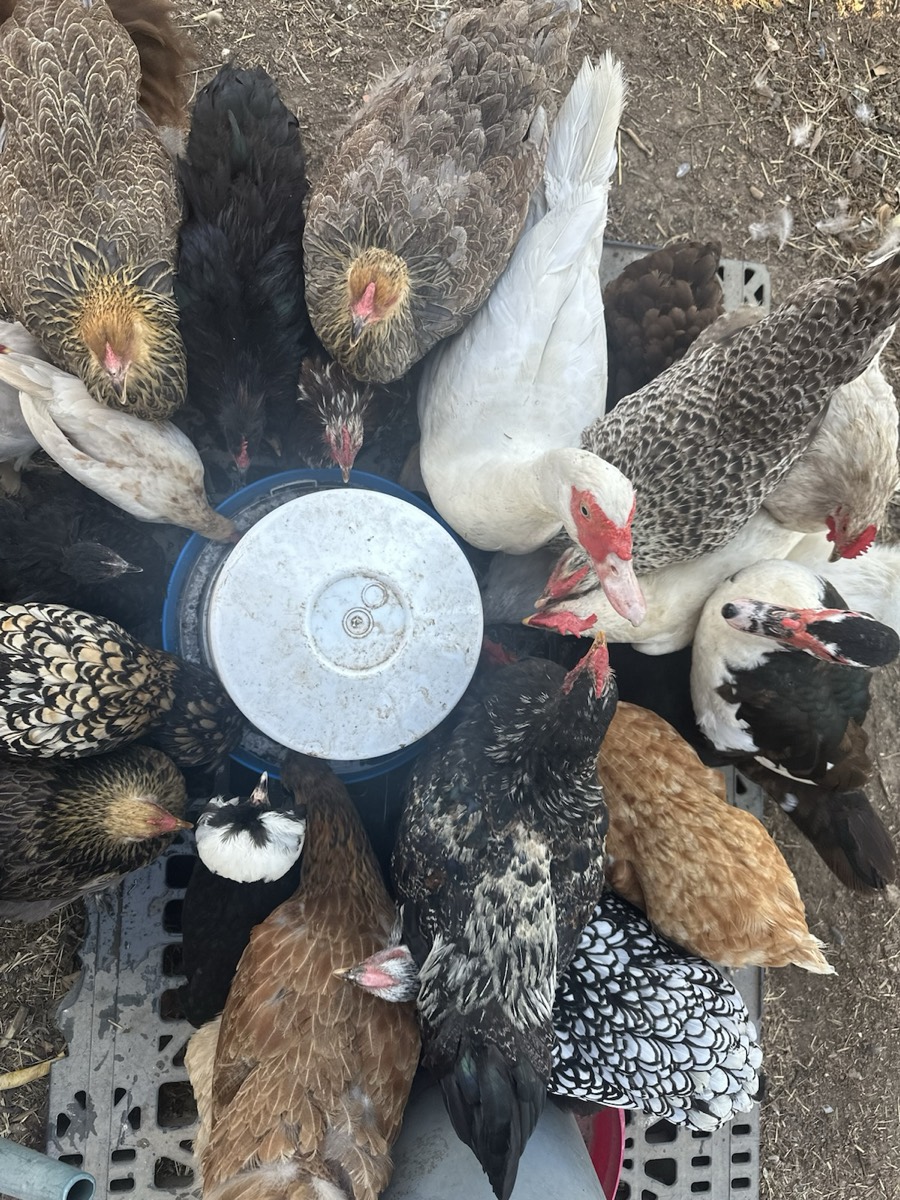
Without the fillers, the story is just: I got up early because the chickens were noisy. Everything was fine. The fillers add no information, but they make it sound alive and natural.
The 3 trickiest ones, explained
Du coup
Officially it means “so” or “therefore”. In practice, French people use it all the time, sometimes in almost every sentence, just to link ideas. If you hear it at the start of a question (« Du coup, tu viens ce soir ? »), it simply means “so…?”.
Quoi
You know quoi as “what”. But at the end of a sentence, it means nothing at all. It just adds a casual, slightly emphatic tone, like “you know” in English: « C'était bien, quoi. »
Ben
A relaxed version of bien, used to start an answer, often when the answer seems obvious: « Tu as faim ? — Ben oui ! » (“Well, yes!”).
Should you use them yourself?
Yes, a little! Using one or two filler words makes your French sound much more natural. A few tips:
- Start with the easy ones: ben, du coup, bon and voilà work in almost any situation.
- Don't overdo it: one filler per sentence is plenty.
- Keep genre for friends: it sounds very young and casual.
- Try shadowing: listen to a short video of French people talking and repeat each sentence straight after them, out loud. It's the fastest way to get the rhythm.
Practise: fill in the gaps
Complete each sentence with du coup, ben or bref:
- Il pleut, ___ on reste à la maison.
- Tu viens ? — ___ oui, bien sûr !
- On a mangé, on a joué, on a ri… ___, une super journée.
Show the answers
1. du coup · 2. Ben · 3. Bref
Bref… now you know! À bientôt,
Victoria