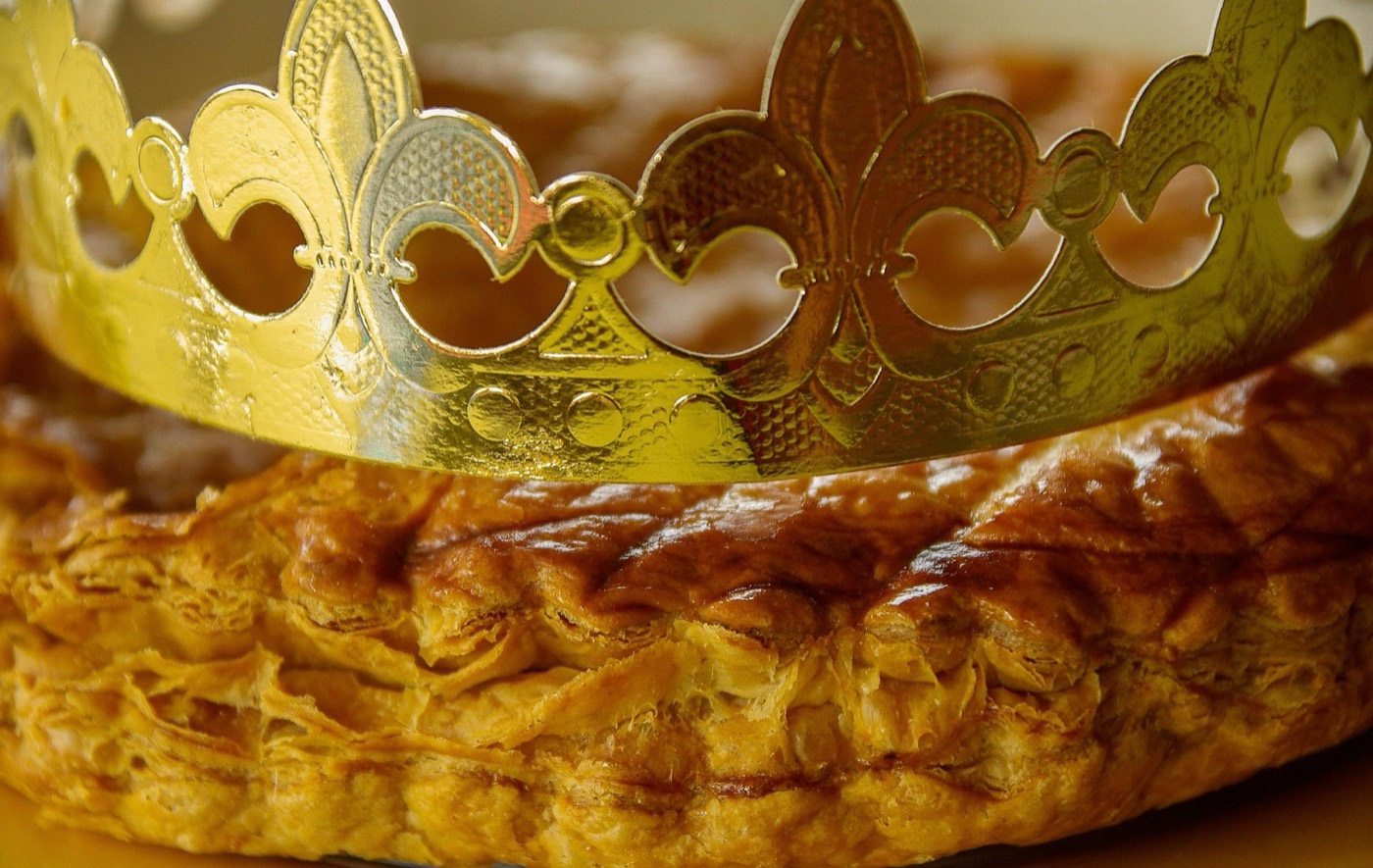
In January, every bakery in France fills up with golden pastries topped with paper crowns. It's the season of the galette des rois, the “kings' cake”, and in families with children, it's taken very seriously. Here's how it works.
What is the galette des rois?
The galette des rois is eaten for Epiphany (l'Épiphanie), on 6 January, which celebrates the visit of the three kings. In practice, the French eat it all through January: with family, with friends, at work, at school.
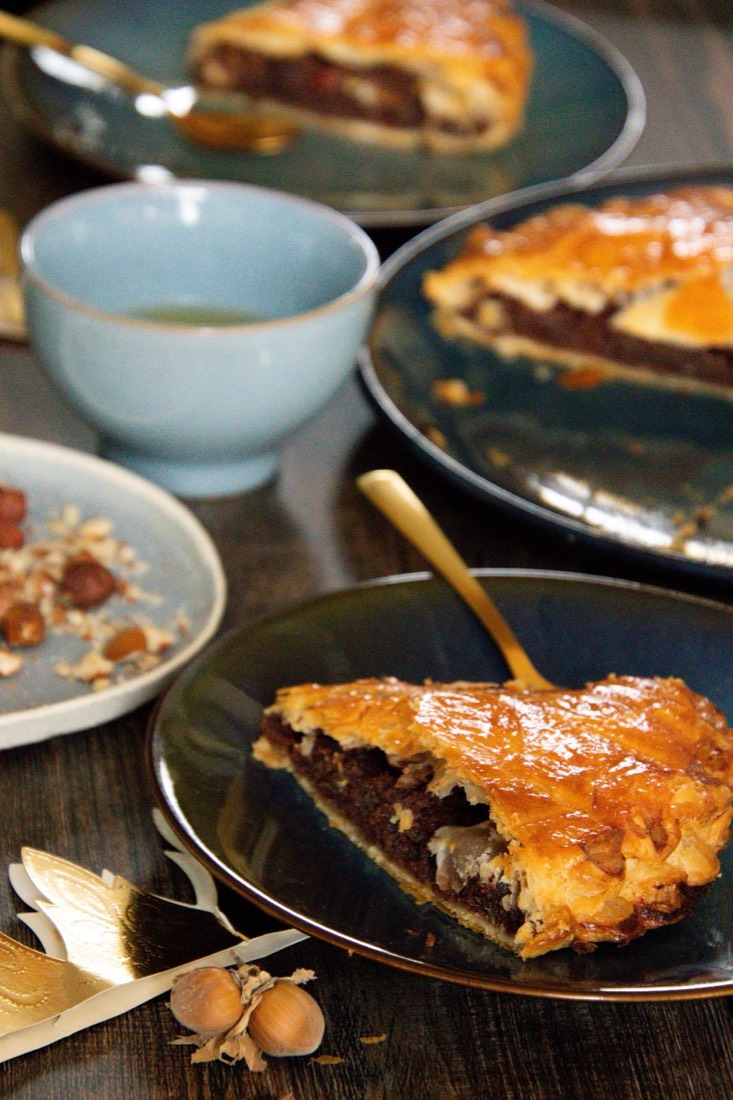
In most of France, it's a round puff pastry filled with frangipane, a rich almond cream. In the south, people often prefer the gâteau des rois, a ring-shaped brioche with candied fruit.
The fève: the hidden surprise
Hidden inside the galette is a fève, a tiny figurine, usually made of porcelain. (Fève means “bean”: originally, it was a real dried bean.) Whoever finds it in their slice becomes the king or the queen for the day, and wears the paper crown.
Careful when you bite into your slice!
The rule that makes it fair: under the table
To make sure nobody cheats, the youngest person at the table goes under it (yes, really) and decides who gets each slice, without seeing them. The adult cutting the galette points at a slice and asks « C'est pour qui ? », “Who is this one for?”, and the child under the table calls out a name.
At our house, it's always William who wants to go under the table. And my secret with three boys? I usually hide three fèves in the galette. That way, no one gets jealous 😛
The king's job
The tradition says that whoever is king or queen chooses their partner, and often offers the next galette. Which is how, in January, you can end up eating galette several times a week.
Useful words
| French | English |
|---|---|
| la galette des rois | the kings' cake |
| la fève | the hidden figurine |
| la couronne | the crown |
| la frangipane | almond cream filling |
| Je l'ai ! J'ai la fève ! | I've got it! I've got the fève! |
Vive le roi (et la reine) !
Victoria